The second half of Ender's game focuses mainly on the trials and hardships of Battle School. Ender is subjected to pain and hardship, making few friends that he can trust and distinguish as human. This is in stark contrast to the unknown commanders of the Battle School, who subject the children and pre-teens to extreme combat conditioning.
Early on, there are easy allusions to "Lord of the Flies". The students are separated into armies under the mercy of the older commanders. The multiple inplications that they sleep naked and never cease to practice easily portrays them as the savages. This also questions the morality and purpose of the commanders.
As they move on, the battles become more unfair and unbalanced. Ender is given the responsibility of command, and his combat record is unmatched. The strain easily tires him out, and his training is accelerated to the point of mental breakdown. He eventually subjects a subordinate, Bean, to the same treatment he received.
This hints at the unbreakable cycle of the military and their discipline in the face of danger. Even at the end of the section, Ender is forced to comabt his old commander and rival, Rose the Nose. As they fight naked in the shower, we are reminded simply that they are not children. What remains in them that can be called soldiers is an title earned through difficult adversity. Even though Ender walks away alive, he unknowingly kills Nose by disregarding soldier's honor. Rose the Nose fought by honor, but Ender resorted to his brother's tactics of guerrilla warfare and deception.
This is all acoompanied by a subplot of Ender's siblings, Valentine and Peter. At such a young age, the two fight a proxy war as allies. The two are able to successfully gain notoriety by debate on the civilian chat network. It is unknown why Valentine helps her demonic brother, but it is clear Peter's motivation is in the belief of radical change for the world.
All of this continues to reinforce the implied themes of the book. This seems more and more to be a critical analysis of Militarism and humanism. It is difficult to distinguish between the criticism and the true telling of the story. The two are blended so well that there may not be a hidden message at all.
I list the themes I have been able to recognize so far:
Ethics and morals: Both the childern and the adults present in the novel are ruthless and heartless in the name of survival. This is noticeable because it is highly extreme; none of the actions of moral ambiguity are questionable in purpose.
Friends/Enemies: The distinction between friends and enemies are highly unclear. It is easy for Ender to distinguish who are threats to him. It is not easy to distinguish between those who wish to help him.
Fear: Everyone in the novel is driven by some form of fear. As a commander, Ender fears for his own life when Rose the Nose and the others conspire against him. Valentine's motivations are by her fear of Peter. Peter fears his future position in a changing world. Colonel Graff fears the Bugger threat high enough to punish and torture children in their respective hells.
Monday, March 15, 2010


Friday, March 12, 2010

Wednesday, March 10, 2010
27) Don't Need No Education
Listen as we honor Corey Haim, rage on the perils of Mr. Sutherland's adolescence revelation, G. Stanley Hall, discuss the injustices of the American education system, Bash the SAT, explain job satisfaction via video games, see how America is stubborn via Exit Signs, and look at Greece's economic woes.
Tuesday, March 9, 2010
26) The Mirror Analogy
 I once heard a beautiful analogy about life. If you've heard it, bear with me. I regretfully cannot remember where it's from.
Life is a constant shattered mirror: you pick up the pieces and try to put it together, but you always end up cutting yourself on the edges. And your reflection keeps changing relative to where you are.
Life regrettably, is not a simple mirror. that would be too easy. I've been doing some heavy thinking about my life and the lives of those around me lately, and I don't really like what I see.
For one, I'm quite pessimistic in thinking nobody reads this blog or cares about what I'm saying. This is mostly because I am not everybody, and I sure as hell would not waste my time on an obscure little web page in the middle of nowhere.
I've always had that pessimism seep into all parts of my life. If my English Final on this blog were any indication, it's that I've clearly given up on some things in my life. One such thing would be the optimism I once had.
This is another part of the rough spots in my life. In the long run, like this post, it's disjointed, confusing, and utterly pointless. But that's just me.
Internet ranting is one way I try to alleviate this pain, but all I every see is the endless swirl of evil and darkness that covers everything.
But what scares me the most is that I'm willing to reveal all of this online, because I'm adamant that no one is actually listening. Or caring.
So what of it? Does humankind have some trick up their sleeve to make me feel better? Nope. I have to suck it up, living another day with this depression that's been on my shoulders for five years. Five years of suffering and no one's tried to help me.
Maybe I'm better off not knowing anything else. Day by day I can criticize stuff, put it on this blog, and it won't matter. Strange that human capacity for kindness is rarely shown, and yet contempt and hate are much easier alternatives.
Self discovery has forced me into this little alley on that street. People walk by, living their lives, and nobody who ever looks down that alley wants to go in. Not worth their time and patience.
Or perhaps it's the place I'm growing up in. Surrounded by heaps of pessimism that automatically take form every time a conversation is started, every time something else happens.
And on top of that, it's raining outside. Just an endless torrent of water, flowing around me, chilling me to the bone. The idea of finding happiness in the rain seems impossible to me now.
I think I can finally say for sure what this blog is for. A final eulogy. A epitaph. Something to mark all those accomplishments I've won over in my studies. Proof that I tried to make this world a better place by criticizing it.
When I die, I think I could say I tried pretty hard. But it wasn't good enough.
Interlude: Lit Circle Letter 1
After reading through the first third of Ender's Game, I have many mixed feelings. Based on my observations and the hype others have given me about the book, this is not what I expected. Given that it is a science fiction book written in the 70s, the past illusions of the future seem imaginative at best.
As we get to know Ender early on in the book, it becomes amazingly obvious that children in this semi-totalitarian society have been forced into servitude of the higher governmental command of the International Fleet (IF). Children are selected for their aptitude through careful surveillance via monitors that are not removed until early adolescence.
The major themes in the book relate to an early and now cliched version of a dystopia. Examples include the observation of children through spinal monitors, the classification of children (Ender is referred to by his older brother as a Third), the prohibition of religion, and the focus of a military in society.
The spinal monitors are an obvious sign of future monitoring, where technology advances to the point that invasion of privacy is undetectable and unavoidable. This is in league to the 1984 "Big Brother" scenario where somebody is always watching what you do. This is the main factor of a governmental control scheme, where fear is the primary variable. Fear easily becomes an identifiable and recurring theme early on in the book. This is further reinforced by the dialogue of two officers at the beginning of each chapter. They comment on Ender's progress, but we do not know who they are.
The classification of children also infers that this society is burdened by overpopulation. As Ender is selected for Battle School, it is revealed that children are bred and monitored to determine their eligibility for battle. This automatically makes the military a primary purpose of life for the IF. This is also briefly mentioned by Dink (p.110) as a form of control to prevent civil war among the countries of the alliance. Although their focus is to defeat the "Buggers", an alien threat to humanity, there is no direct evidence to support that the IF are fighting direct battles.
The prohibition of religion is also a testament to the power of the IF. Since religion is banned in this world, Ender's recruiter, Colonel Hyrum Graff, comments on Ender being a "badge of cowardice" (p.23), in an attempt to sway him to enter Battle School. Obviously, religion would cause doubt to the IF's domination over peoples' lives.
Lastly, the military is present to explain the sole purpose of the IF. It is used for control and force deterrence against any possible rebellious attitudes. With children trained to be officers from the early age of six, the military complex and efficiency of the IF is unquestionable. Their idol and hero is Mazer Rackham, who defeated the Buggers in a decisive battle before Ender was born. He is mentioned frequently, symbolizing the "people's hero" role in the IF society. Through this, it becomes obvious that violence is the solution the IF infers is the only plausible instrument for resolution to adversity.
Most of the themes in the book are possibly accidental. As with any analyzation, interpretations are left to the reader. However, it should not be accidental that Ender's Game shares many ties with popular science fiction novels such as The Forever War and Starship Troopers. It is too early on to tell whether the book's purpose is to criticize military dependent governments, praise them, or just to simply tell a science story.
As we get to know Ender early on in the book, it becomes amazingly obvious that children in this semi-totalitarian society have been forced into servitude of the higher governmental command of the International Fleet (IF). Children are selected for their aptitude through careful surveillance via monitors that are not removed until early adolescence.
The major themes in the book relate to an early and now cliched version of a dystopia. Examples include the observation of children through spinal monitors, the classification of children (Ender is referred to by his older brother as a Third), the prohibition of religion, and the focus of a military in society.
The spinal monitors are an obvious sign of future monitoring, where technology advances to the point that invasion of privacy is undetectable and unavoidable. This is in league to the 1984 "Big Brother" scenario where somebody is always watching what you do. This is the main factor of a governmental control scheme, where fear is the primary variable. Fear easily becomes an identifiable and recurring theme early on in the book. This is further reinforced by the dialogue of two officers at the beginning of each chapter. They comment on Ender's progress, but we do not know who they are.
The classification of children also infers that this society is burdened by overpopulation. As Ender is selected for Battle School, it is revealed that children are bred and monitored to determine their eligibility for battle. This automatically makes the military a primary purpose of life for the IF. This is also briefly mentioned by Dink (p.110) as a form of control to prevent civil war among the countries of the alliance. Although their focus is to defeat the "Buggers", an alien threat to humanity, there is no direct evidence to support that the IF are fighting direct battles.
The prohibition of religion is also a testament to the power of the IF. Since religion is banned in this world, Ender's recruiter, Colonel Hyrum Graff, comments on Ender being a "badge of cowardice" (p.23), in an attempt to sway him to enter Battle School. Obviously, religion would cause doubt to the IF's domination over peoples' lives.
Lastly, the military is present to explain the sole purpose of the IF. It is used for control and force deterrence against any possible rebellious attitudes. With children trained to be officers from the early age of six, the military complex and efficiency of the IF is unquestionable. Their idol and hero is Mazer Rackham, who defeated the Buggers in a decisive battle before Ender was born. He is mentioned frequently, symbolizing the "people's hero" role in the IF society. Through this, it becomes obvious that violence is the solution the IF infers is the only plausible instrument for resolution to adversity.
Most of the themes in the book are possibly accidental. As with any analyzation, interpretations are left to the reader. However, it should not be accidental that Ender's Game shares many ties with popular science fiction novels such as The Forever War and Starship Troopers. It is too early on to tell whether the book's purpose is to criticize military dependent governments, praise them, or just to simply tell a science story.
Saturday, March 6, 2010
Monday, March 1, 2010
24) Forced Retardation
 Ever since coming across John Taylor Gatto, I've become convinced that the American school system is pointless in teaching kids anything. All it does is force kids into acknowledging their unimportance and inferiority in comparison to others. This fits the role of becoming a capitalist consumer quite well.
As I pondered this earlier in a post, I tired to think of some perfect examples of how this system is so terrible. The list continues to grow for me, especially when it comes to testing and homework. And yet no one would dare dispute that schooling is vital and important. But perhaps that is the greatest joke; the system that teaches nothing is the most important tool in learning anything in America. What we learn is that life will never be fair, opportunities are there if you are willing to stress yourself unnecessarily, and that there shall be no hope for those who wish to conform outside the system.
While trying to study for the SAT, I found it as an important example of this education's idiocy. According to The Princeton Review's 2010 edition of the SAT test prep book, it is stated clearly in the introduction: The test writers say that this test measures "reasoning ability," but actually, all the SAT really measures is how well you take the SAT. It does not reveal how smart or how good of a person you are.
Well that's just great. Why the hell am I supposed to take a test that measures NOTHING? Let's all live in the land of rainbows and sunshine with bunnies going down gumdrop lane. Still a better alternative to wasting my time.
Upon further examination, the introduction also states that the people who compose the test, the EST, are not college level professors or teachers. In fact, most, if not all, have nothing to do with any education system. They're just people who make the test. They even make tests for butchers and professional golfers. Well, nothing could possibly go wrong there.
The solution? Let me quote Caitlin:
Most successful students must work very hard in high school to earn the best grades they can. Students who get extra help, study, and try their best are the ones who tend to get good grades. Their work ethic determines how well they will do in the future. Therefore, a better way to predict students’ college performance is by looking at their previous achievements and grades. If colleges focus more on the accomplishments of the four years of high school rather than one test, they will more accurately determine how well students will perform in college.
What really bothers me is the fact that I am fully aware of all of this. And yet, I still have to take the test in order to advance into college. I don't have to tell you what it feels like to do something that you know is pointless.
So just how stupid does the American School system think I am? Tell you what: I'd rather not take the test and be called an uneducated fool, but at least I'm not a group of morons who have such blind faith into a failing system. A bunch of morons who spend millions of dollars every year. A group of morons who betray what it means to educate.
Monday, February 22, 2010
23) Fighting Force Majeure
 When something becomes mandatory adhering to some status quo of rules and codes, it no longer becomes an activity that you might want to do. This holds precedence, especially in high school, when students are forced to do assignments they do not see the reward in. Day after day, the modern student must struggle against a cause they have no standing reason to believe in.
One such example is creative assignments. This blog falls under that category. Where as some might be able to simply create art on a whim, others must toil through it. Making it mandatory in the name of required "Schooling" effectively makes it that much worse.
Perhaps where I'm going with this is that school seems utterly pointless at an early age. And some may hold that belief true in their later years. But like any effective/ineffective schooling system of the world, we must face facts. The current social belief stands that an education makes a person, regardless of who they may choose to be.
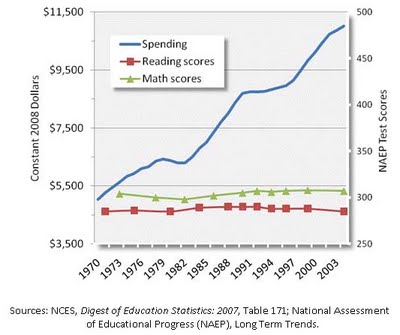
So why does the American school system invest the most in education, and yet rank the lowest in quality students? As Obama pours money for education, many doubt that spending more makes better students.
So you may say that this is another excuse of mine to avoid school? As I recall, the United States of America is a democratic country. Should the students not have a direct say in what they should learn? How much they should receive in funding?
And of course the adults and politicians would declare that we are too young to make such decisions for ourselves. This is a legitimate concern. But what about the young adults? Are they to say our opinions into the matter mean nothing?
Says who? The American society is hell bent on creating the image that an education is the number one priority for a youth. But isn't the youth to decide what they want in life?
And what is the point of all this if they sleep in class, as they do now, if they are not interested in learning something they are forced to? If they have no genuine interest in their lives? The fact that students coin their education "useless" should tell us something. But let me quote John Taylor Gatto, for he says it better:
"The secret of American schooling is that it doesn’t teach the way children learn — nor is it supposed to. Schools were conceived to serve the economy and the social order rather than kids and families — that is why it is compulsory. As a consequence, the school can not help anybody grow up, because its prime directive is to retard maturity. It does that by teaching that everything is difficult, that other people run our lives, that our neighbors are untrustworthy even dangerous. School is the first impression children get of society."
I'm not saying that we should eliminate youth education altogether. But if we can create a system where learning is not a CHORE, it would be a big improvement. A system where people would learn what they want to learn. A system not based on a preset standard that is adhered to only because it is convenient. Only because it is a system that everyone says is effective. Only because it is a system where nobody asks the children what they want. It would really say something about the United State's will for Life, Liberty, and the Pursuit of Happiness.
What I want is not for society to shun a student who decides to quit school because they know their will better than anyone else. That the independence they seek from the tyranny of a failing education system was not in vain, so that one day they may pursue their endeavors in any way they wish, whether it include an education or not.
And most importantly, the idea that you don't need to have an education to enjoy life. Some don't want to spend a tenth of their life confined in being taught the illusion that you can't do anything unless society says you can according to their customs and rules.
Thursday, February 18, 2010
Interlude: A Favor
“This must be it.” Daniel said.
He was looking down into his palm, staring at a crumbled piece of paper with an address on it. The writing was barely legible, a mass of scribbles.
He looked up, and in front of him appeared an old, almost civil war era type of house. It basked in the warm yellow hues of the afternoon sun. Birds could be heard chirping a couple houses over.
He looked forward to see the front door of the gray house, paint peeling off the edges of the old and crippled wood. It was easily the oldest house on the block.
Daniel couldn’t help but mutter to himself. “Damned G.I. bill. Never enough for anybody.” He let out a small wheezing cough, echoing down the street.
He stepped up onto the front porch, the wood creaking under his weight. The front door was already half opened. He knocked on it once. Twice. No answer. The yellow glow of the living room inside beckoned to him, the curtains drawn, shielding the blinding sun. It was very dark and gloomy compared to the outside street of suburbia.
Inside, the house was a mess. There were books strewn about everywhere, some open to random pages, others with withering covers. The pages were a dulled yellow. Beside them lay empty bottles of alcohol.
Daniel stumbled inside to find a man snoring in an armchair. He went back to the front hallway to close the door, and then took a seat in an opposite chair in the living room. The table in between them was loose with papers and snapped pencils. He shuffled and read a few, before waking the man from his slumber.
He slowly came too, rubbing his eyes when he realized who it was. “Daniel? Daniel Smith? That really you, or am I having another goddamn drunk fantasy?”
“I’m not that French girl with her skirt gone in Paris. So yeah, it’s me Capt’n.”
The man smiled warmly. “I remember her. She was one hell of a bitch. Remember when she hit the C.O. and knocked his helmet off? Told the damn bastard not to flirt with her.”
Daniel took a half empty bottle and drank a swig. It was hard whiskey. He smiled back with some reluctance. “How you been Capt’n? Still raising hell?
“That’s sir to you, private. And I’m in here rotting my ass off in this godforsaken house. Not going to last long.”
Daniel looked down, his tone more serious. “That bad?”
“No benefits. All I ever end up doing is yelling at some poor clerk. I scared this one kid shitless when I started to tell him about Normandy.”
“Yeah.” Daniel said remorsefully. He picked up a pictured frame that was lying on the desk. The picture showed him, his old squad, and the Captain, all standing at ease. Some were smiling, others making faces at the camera. It was dated March ’42. Daniel couldn’t help but feel a grin spread on his face.
“Half the people in that picture are gone.” The Captain said. He took the whiskey bottle from Daniel and emptied it.
“That’s gonna kill you worse than any arty shell, Capt’n.”
The Captain scoffed. “I’m already dead. Just a matter of when. At least with an 88 I know what to do. Here, I don’t got shit left.”
“We all got something left Capt’n.” Daniel leaned back into his chair. “Dozer’s got a job for Ford now.”
That brought a laugh out of the Captain. “Couldn’t imagine a dumb bastard like him to start buildin’ cars. Good for him though. Good for him.” He scoured around for another bottle. “The rest of us ain’t so lucky. Some of us only ever knew how to do one thing. And damnit, I knew how to do my job.”
Daniel spotted a half empty bottle on the floor next to him, and tossed it to the Captain. The two sat down and stayed silent. They passed the bottle back and forth, drinking until it was all gone.
The Captain mumbled softly. “I know this seems weird, but I called you here to ask a favor.”
“A favor?”
“Do you remember that oath we made on that transport ship?”
“You mean the one on the USS Mariner?”
“Yeah.” The Captain coughed, clearly uncomfortable. “It’s time for me to cash in on that. Tell em’ I tried. I tried so damn hard. Tell Dozer, Cavelli, anyone that’s left.”
Daniel shifted in his seat. “Capt’n?”
The Captain slinked back into his armchair. “Like I said, I got nothing left. And I’m already dead. I don’t belong anywhere else. Just promise me you’ll tell em, and that you don’t end up like me.” He paused. ”I have to honor my vow.”
“That doesn’t mean throwing it all away. Enough of us are all still alive. We still have lives to live. Things are different now.”
“I’ve thought about it long and hard. I should’ve died with em.” He paused. “My life is back there. Here, it doesn’t have a meaning. A purpose. I need to make things right. I will always be their commander, life or death.”
“Live together, die alone?”
“Yeah.”
Daniel got up from his chair. “I can’t change your mind?”
The Captain got up and shook his hand. “No.”
Daniel gave one last salute, said a protracted ‘Semper Fi’, and then went out the front door, closing it behind him with a heavy thud.
The Captain went to his bedroom closet, took out the M1911 pistol inside, and then pointed it at his own forehead. His tired finger wavered against the trigger.
Daniel ran down the street, not wanting to witness the loss of another friend. He didn’t want to have anything to do with the touch and smell of death. He didn’t want to see any more blood. He ran as if bullets were being fired. They were.
A shot rang out, echoing among the houses of suburbia.
Daniel turned, stared for a moment, and then continued his run. He could feel the sadness and hopelessness, the anger rising in him once again. His quiet voice did not echo, a whimper in comparison. “Live together, die together.”
22A) The Apple Incarnate
 An update to my previous post, with a much better explanation on why we should fear Apple in its entirety.
Bottom line, this is a story that needs to be told.
Subscribe to:
Posts (Atom)